SEO Algorithm — A 15-Tool SaaS Platform For SEO Professionals
A full SaaS platform we designed, engineered and optimized end to end: 15 SEO tools in one workflow, built on a core of proprietary analyses the market doesn't offer. We were the client, the product team and the SEO team at once, which is the whole point. We build complex products, and we put search into the foundation rather than on top.
The project started as our own in-house instrument. Working on client SEO, our team kept hitting the same wall: the data needed for a single decision was scattered across six different subscriptions, and some of the checks that mattered most weren’t available anywhere. So we built our own.
The task was to turn that internal tool into a real product: bring every tool into one place, add the analyses competitors didn’t offer (link quality analysis on our own methodology, a full content audit) and wrap it all in an interface a professional could actually enjoy using. Design, front end, back end and its own SEO, all built from scratch, in-house.
Professional SEO specialists, in-house SEO and marketing teams, and agencies. People who run this work daily and need precise answers, not another dashboard full of numbers they have to interpret.
The platform is built to work across B2B, B2C, SaaS, ecommerce and local sites alike.
We designed and developed the whole platform in-house: UX/UI, front end, back end and its own SEO. Fifteen tools in one workflow, with a proprietary core the standard stacks don’t run: the Core Intelligence suite (Coverage Map, Information Gain, Commercial Audit, Topical Map) and a full Text Audit. Every other tool was rebuilt on live data and reworked for how search actually behaves now. Three decisions shaped it.
Closing the gaps. We added the checks the market was missing: a Text Audit (E-E-A-T, AI detection, readability, plagiarism), a Link Quality Analyzer built on our own methodology rather than a single borrowed metric, and an AI Tracker that shows where a brand appears across six AI engines.
AI where it earns its place. We connected AI only to the tools that genuinely benefit from it. The SERP analyzer, for example, generates a content brief from real top-results data, not from a generic prompt.
An interface that stays out of the way. The brief called for a clean, modern, genuinely usable product. Every score is transparent, showing the math behind it instead of a black-box number, and the design gives a specific answer rather than dashboard noise.
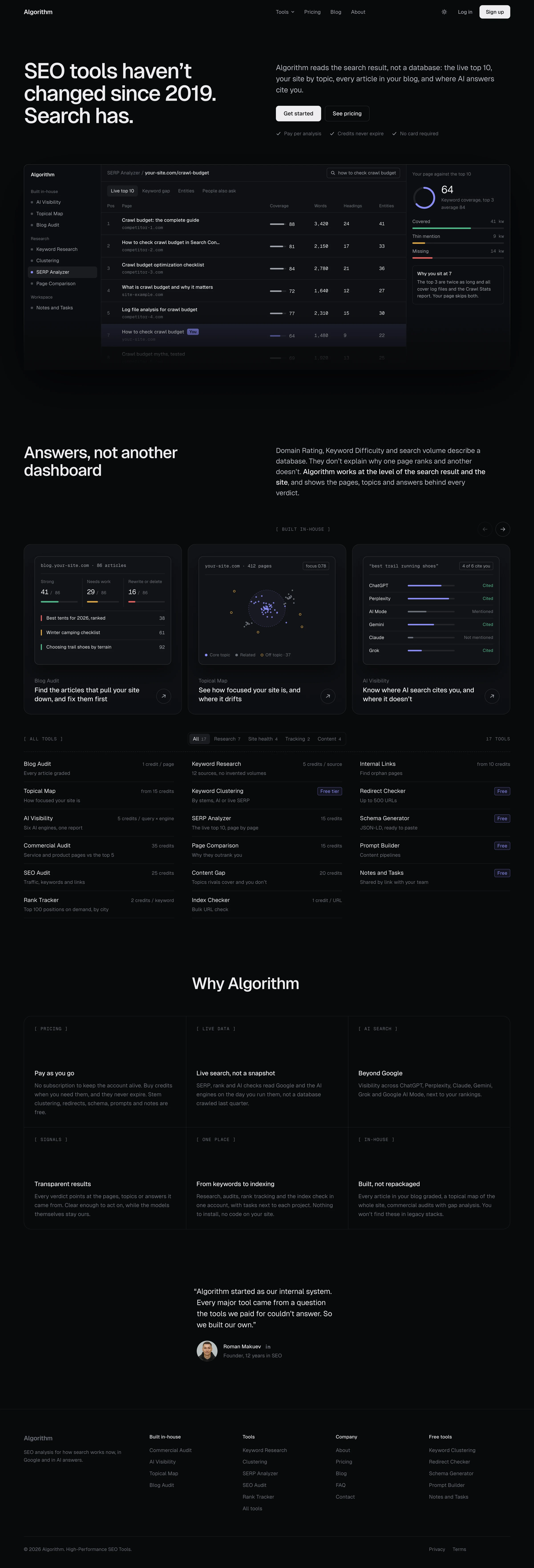
The homepage had one job: make a professional want to open the tool, not close the tab. A clear promise, a live dashboard preview, the toolset laid out by the way the work actually flows. Dark and focused, built to feel like an instrument, designed and coded from scratch in-house.
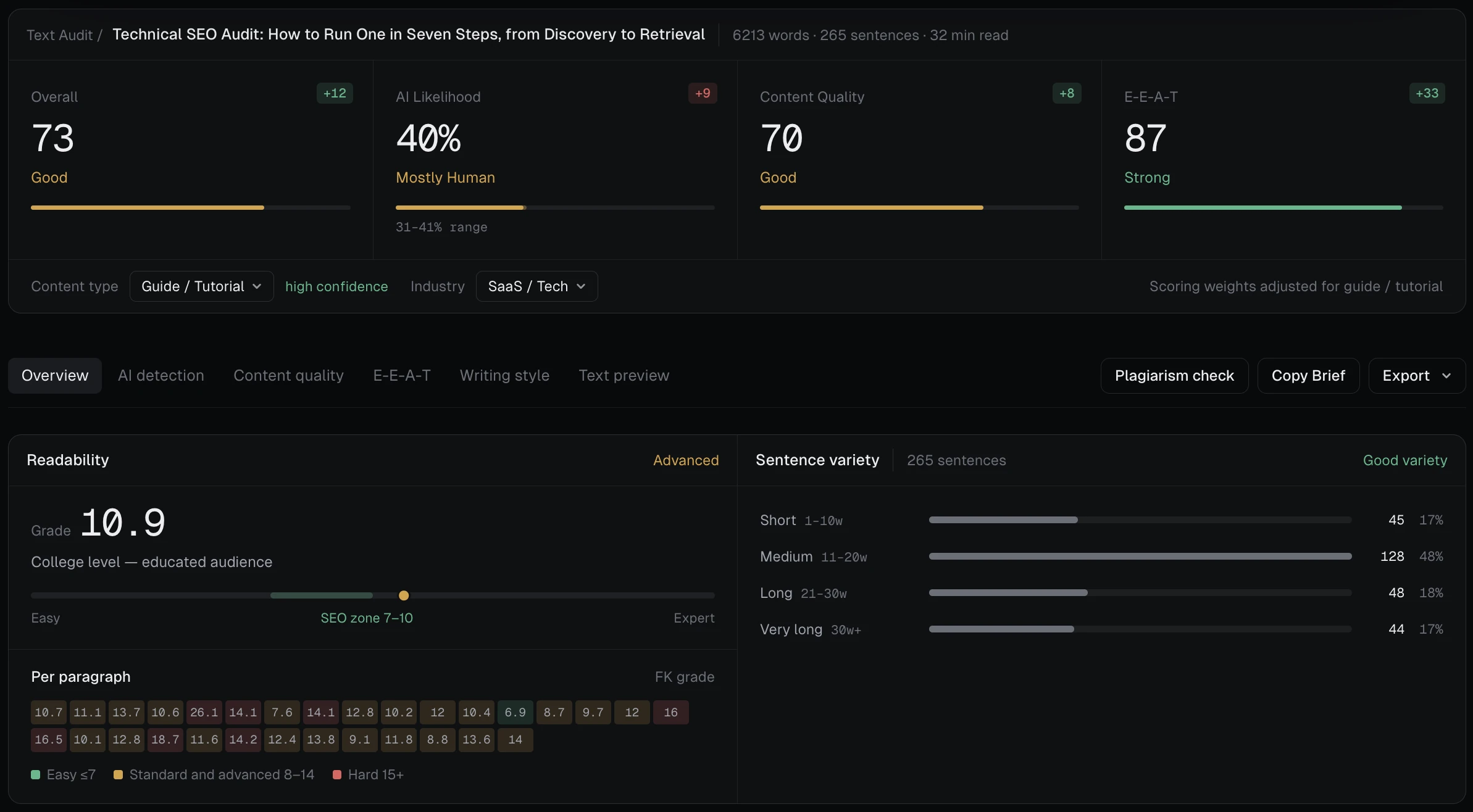
Before publishing, writers and editors kept asking the same two things: is this good enough to rank, and where will an engine read it as machine-written. This tool answers both. E-E-A-T, AI-likelihood, quality and readability scored together, every number showing the math behind it rather than a black-box verdict.
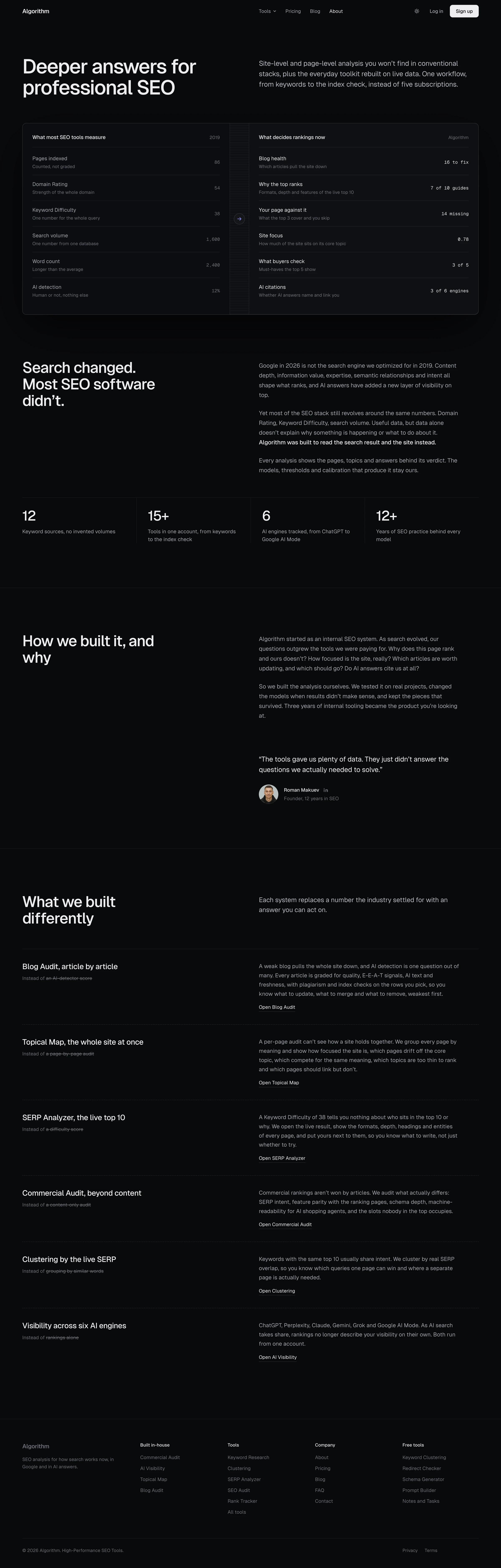
No founders-and-values filler. The page explains why the product exists: what most SEO tools still measure set against what actually decides rankings now, then how three years of internal tooling became a product, and the six systems that each replace an industry number with an answer you can act on.
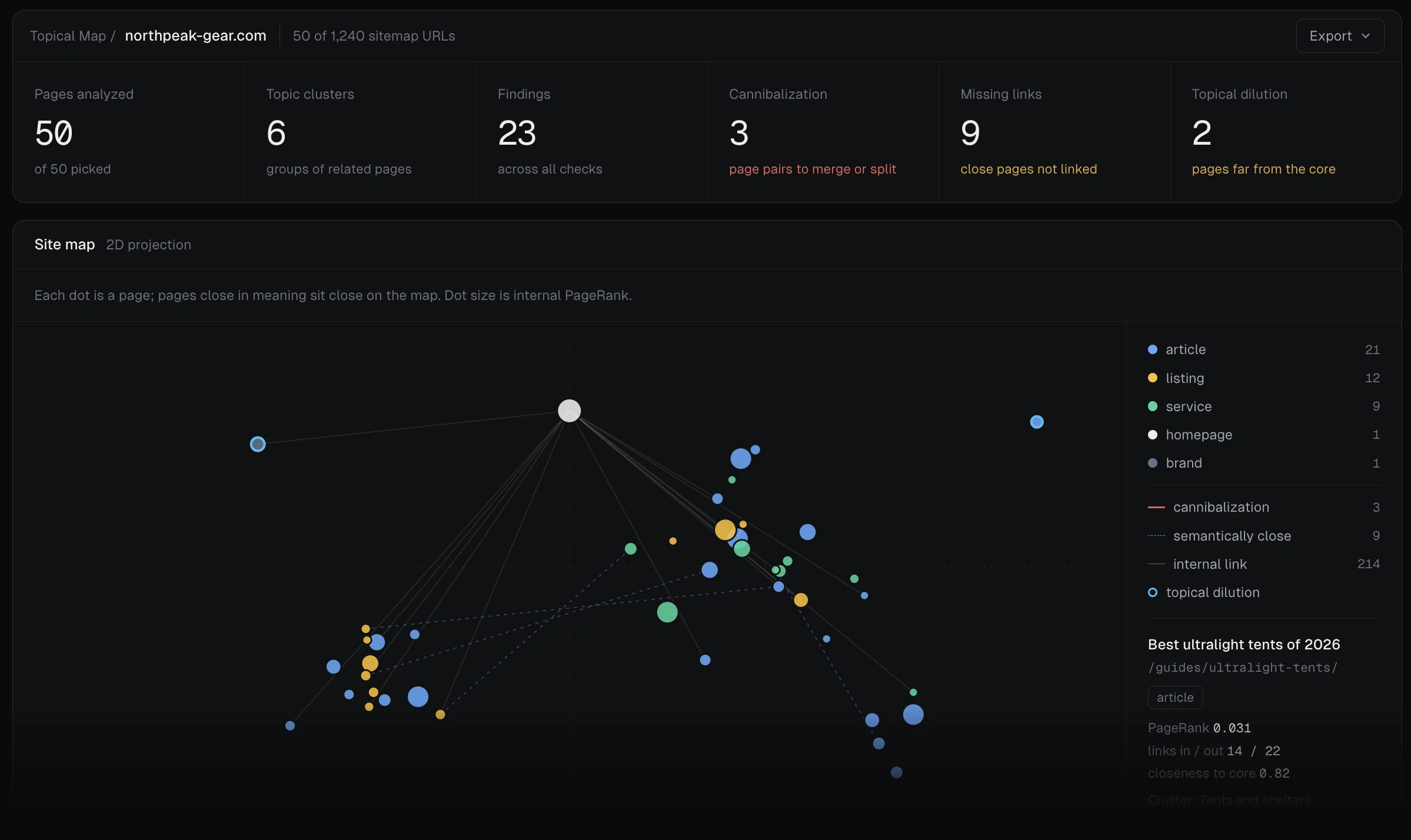
Internal links, pages and brand nodes plotted as one interactive map, sized by weight, with keyword cannibalization flagged in red. It turns a sprawling site into a structure you can actually reason about.
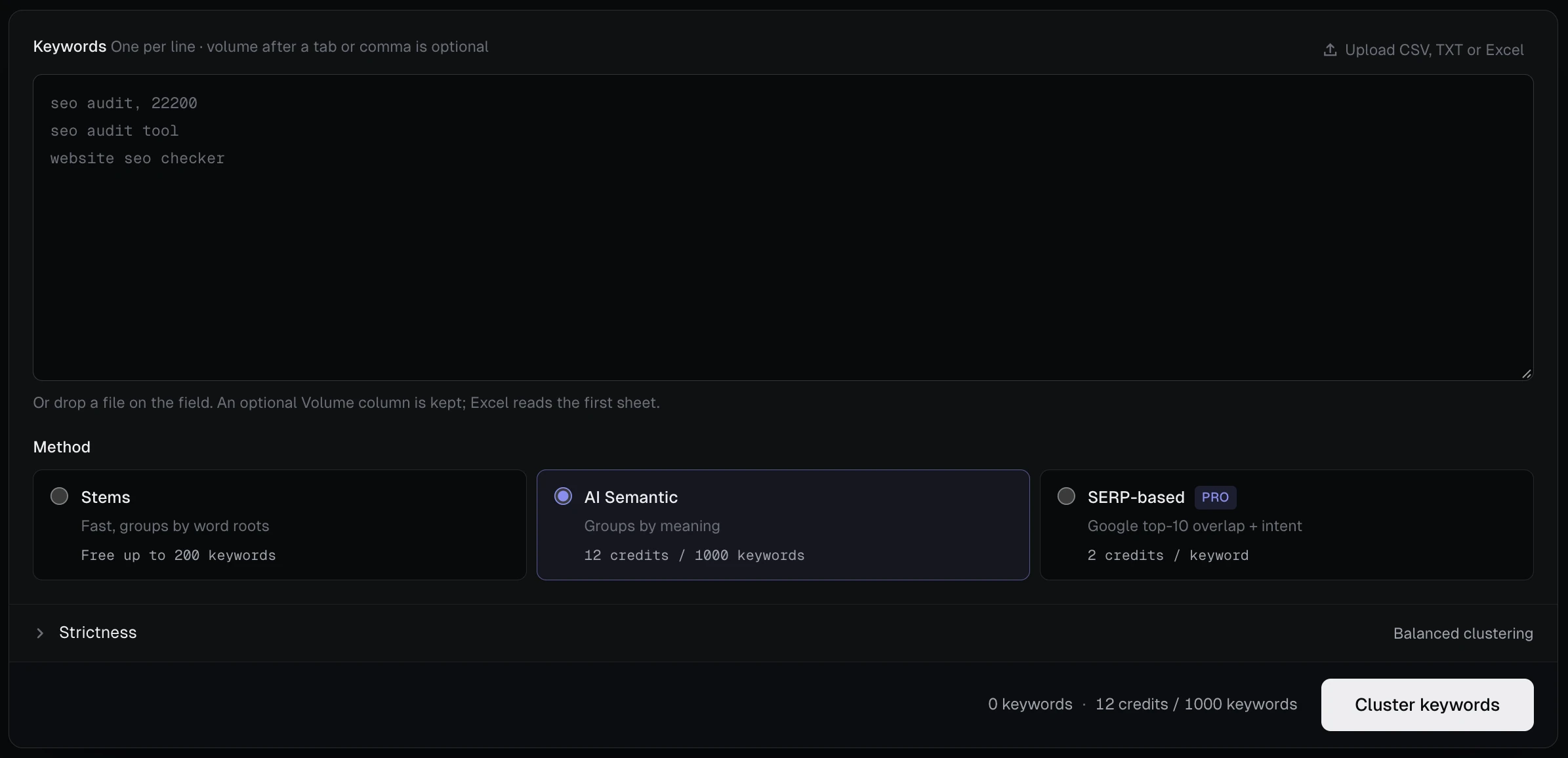
Three grouping methods in one form that never overwhelms: word stems, AI semantics, or live Google top-10 overlap, each with adjustable strictness and transparent per-method pricing. Powerful options kept legible, so intent boundaries stay clean at scale and the user never feels the machinery.
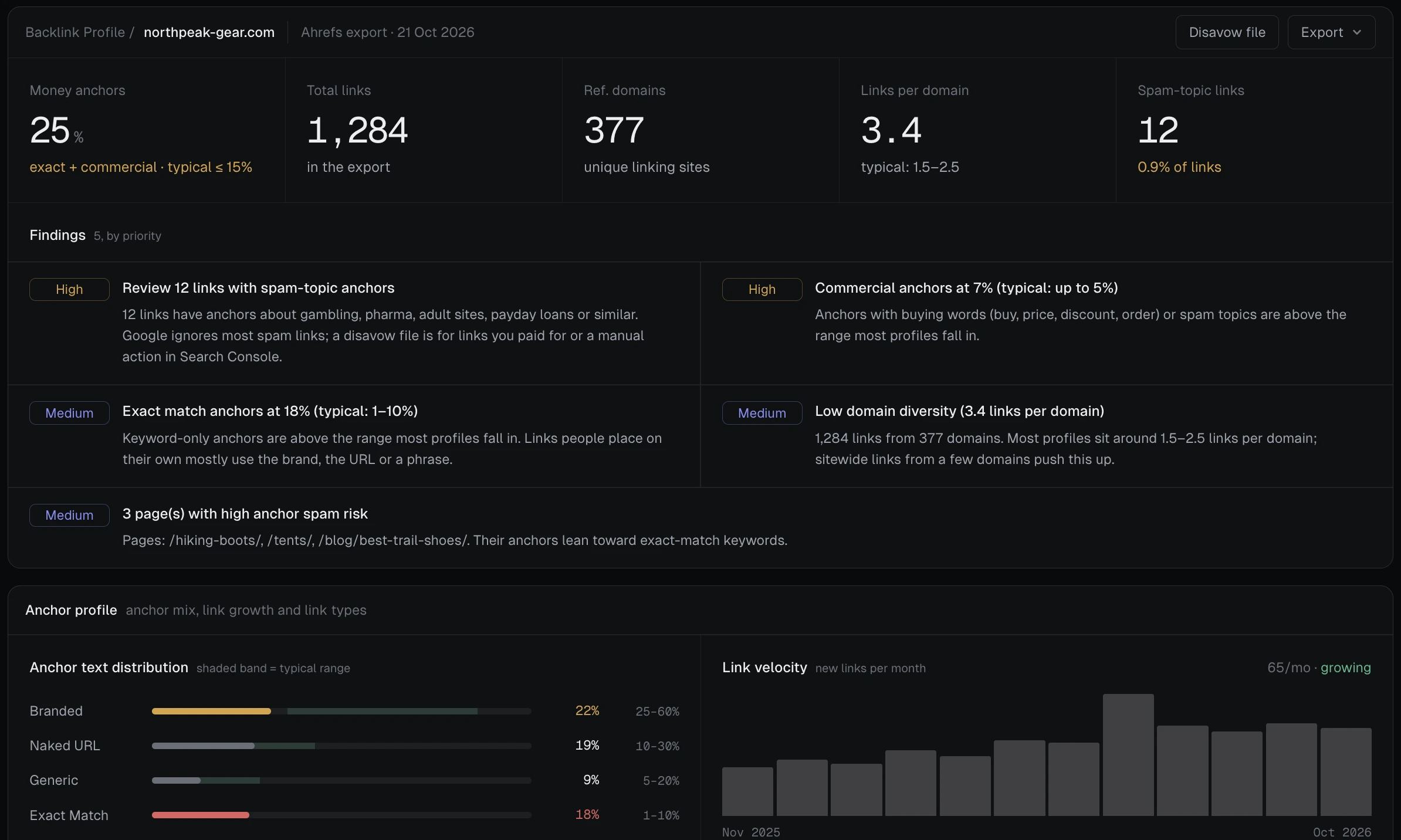
Not a single borrowed metric, but an Anchor Health Score built from 30+ factors: anchor distribution against healthy ranges, link velocity, dofollow balance, toxic-link detection, a disavow file one click away. Thirty signals under the hood, one readable score on screen: the hard part engineered away so the answer is obvious.
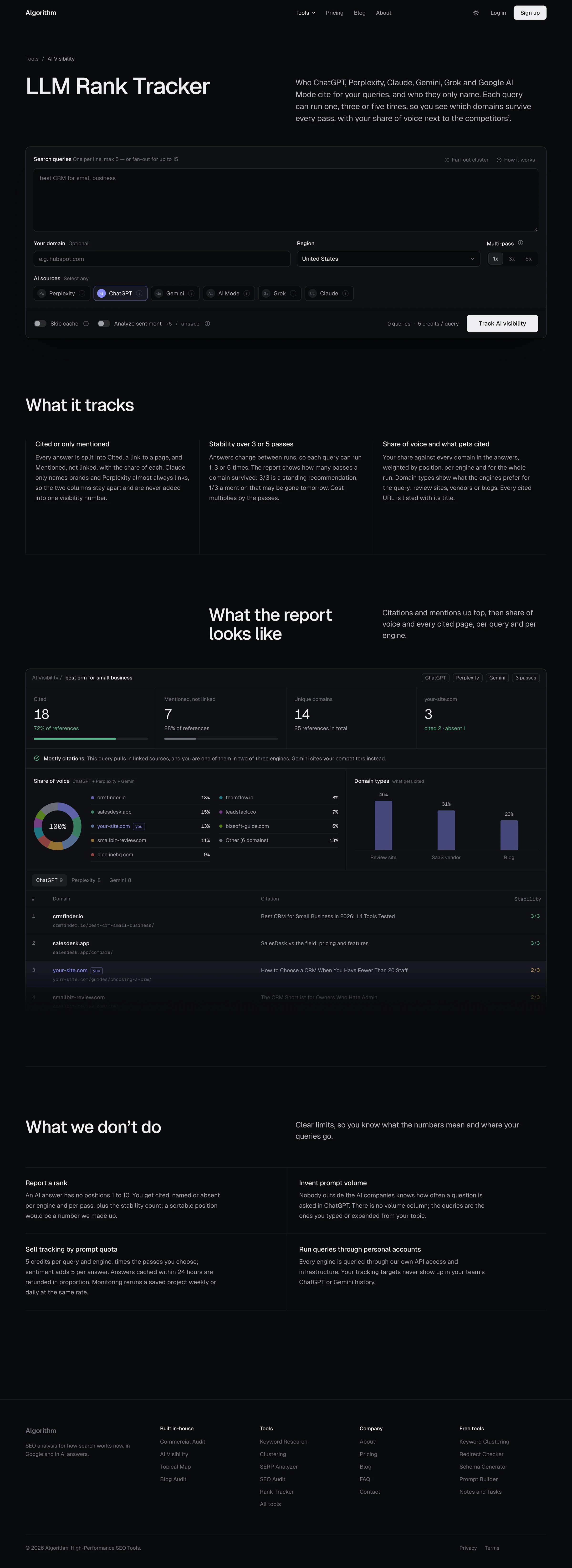
Search no longer ends at a blue link. Buyers ask ChatGPT and Perplexity who to trust, and you can’t see whether your brand comes up. The AI Tracker checks visibility across six engines and runs each check several times, so a one-off mention never gets mistaken for a real recommendation, with share-of-voice and citations tracked over time.
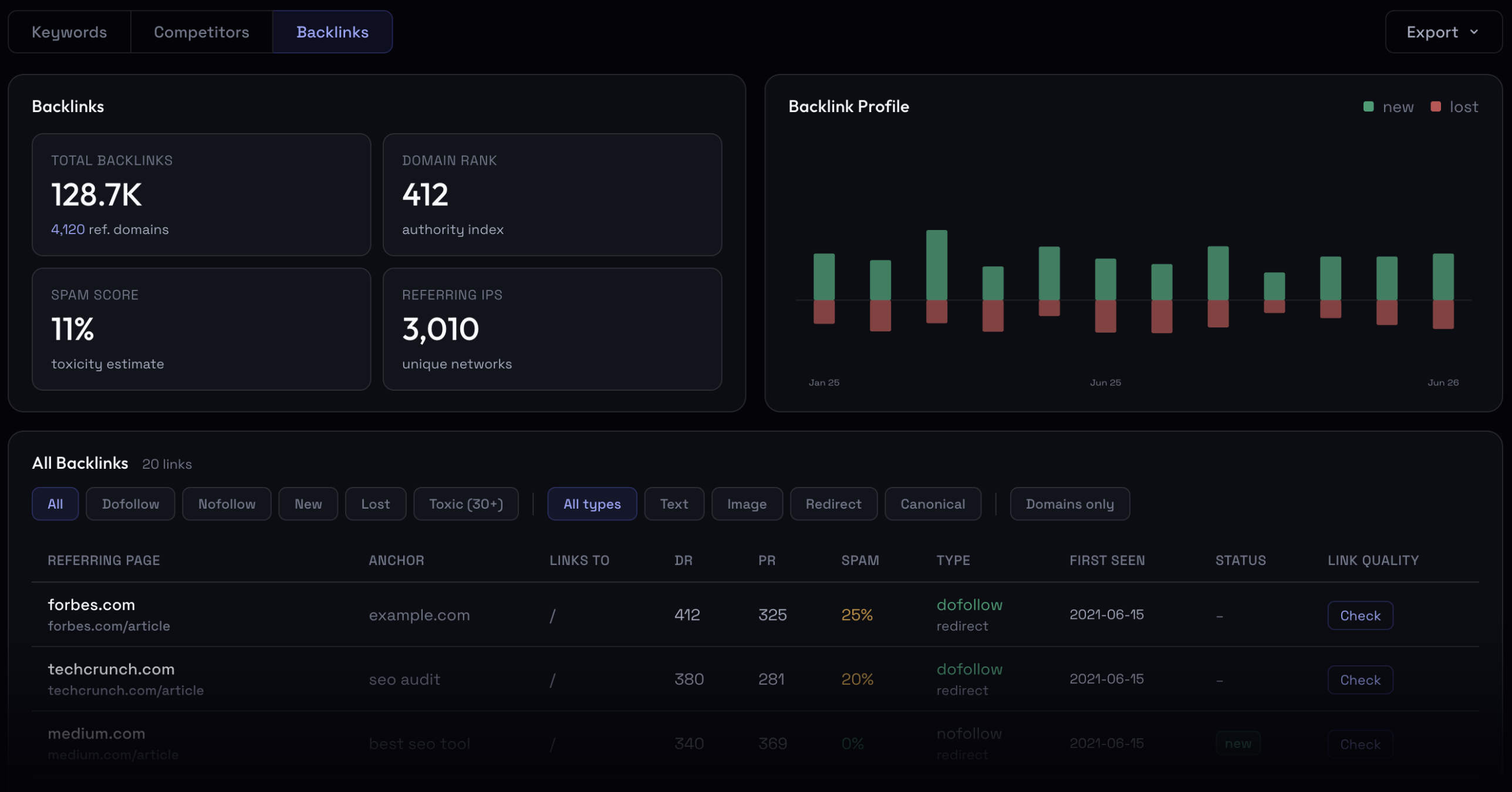
Total links, referring domains, toxicity and authority up top; every backlink below filterable by type, status and quality in a single click. The complexity sits under the hood, the screen stays calm, and a decision takes seconds instead of a spreadsheet session.
A full SaaS product, from first wireframe to a working tool.
 Design · Dev · SEO
 UX/UI · Design
 UX/UI · Design
 E-Commerce · Design
 UX/UI · Design
 Landing Page · Design
 UX/UI · Design